

Flight Controls
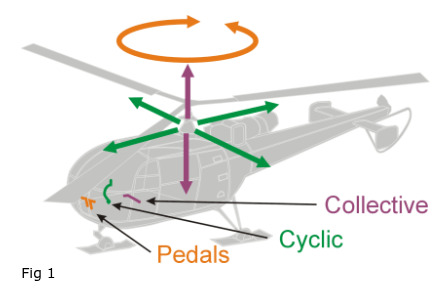
There are four primary flight controls in a helicopter. Unlike fixed-wing aircraft, all four must be coordinated simultaneously — especially in the hover, where even small corrections require input from all controls at once.
Collective
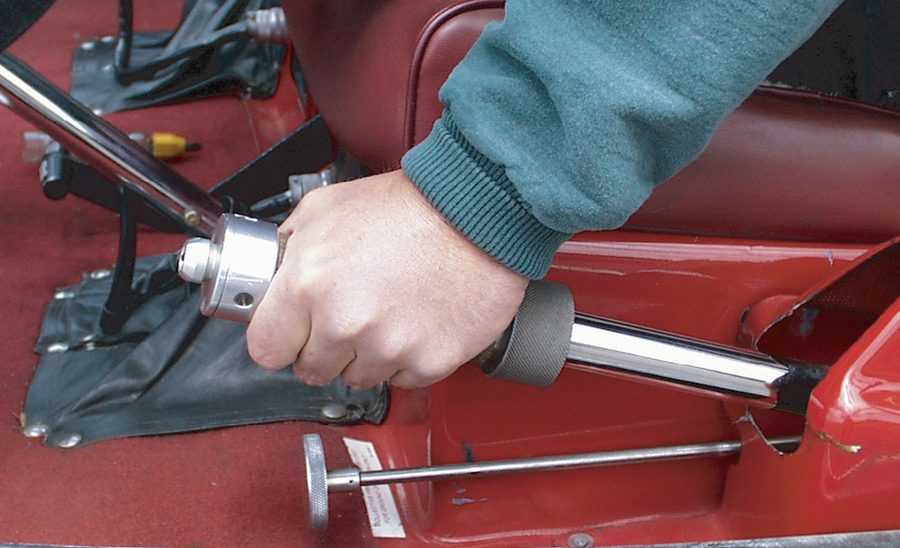
Located on the left side of the pilot seat, pulled up or pushed down. Changes the pitch angle of all rotor blades simultaneously.
- Raising collective = increases blade pitch = more lift = aircraft climbs (or maintains altitude as speed decreases)
- Lowering collective = decreases blade pitch = less lift = aircraft descends
- Raising collective also increases drag and torque — requires right pedal input to compensate
- The throttle correlator (or governor on turbines) automatically adjusts engine power to maintain RPM as collective changes
Cyclic
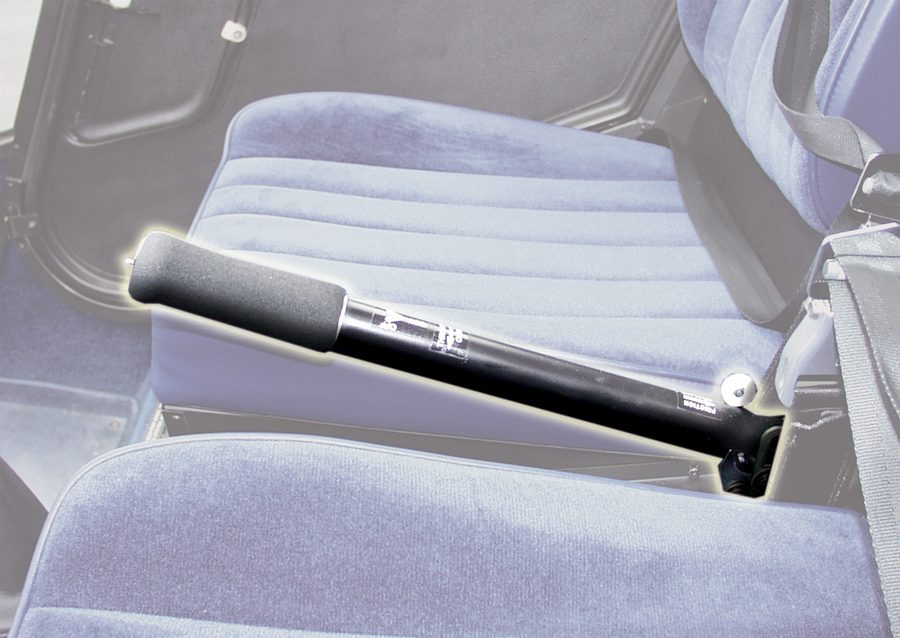
Located between the pilot's legs (or on the right side in tandem seating). Tilts the rotor disc in the direction you push it.
- Forward cyclic = rotor disc tilts forward = helicopter moves forward
- Aft cyclic = rotor disc tilts back = helicopter slows or moves backward
- Left/right cyclic = lateral movement
- In a hover, the cyclic is your most active control — small, constant corrections
- Works by changing blade pitch at different points in the rotation (via the swashplate)
Anti-Torque Pedals
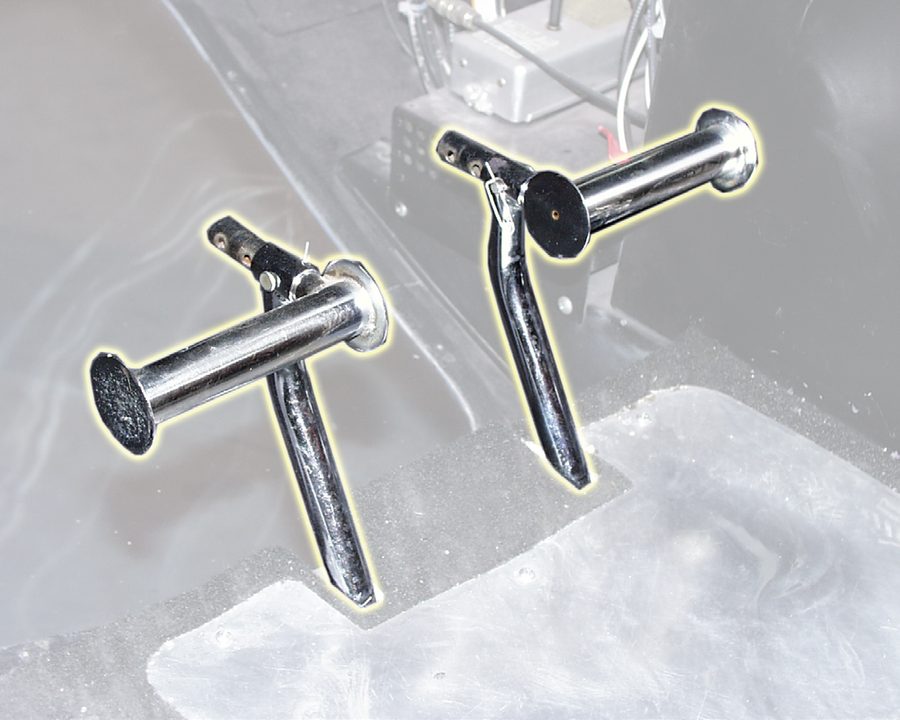
The two foot pedals control the tail rotor blade pitch, which controls yaw.
- Right pedal = decreases tail rotor thrust = less is opposing the main rotor's torque = the torque turns the nose right (for a CCW main rotor)
- Left pedal = increases tail rotor thrust = more than enough to oppose torque = nose yaws left
- In cruise flight, pedals are mostly neutral with slight right pedal to counteract torque
- During power changes: adding power needs right pedal, reducing power needs left pedal
- At low airspeed and high power, the pedals are working hardest — highest LTE risk
Throttle
On most piston helicopters, the throttle is a twist grip on the collective. On turbines, it's typically a separate condition lever (idle/fly/off).
- The throttle correlator links collective and throttle automatically — raise collective, throttle increases
- On carbureted engines (R22), the correlator is mechanical. You may still need to fine-tune RPM manually
- On turbine helicopters, a governor automatically maintains RPM — hands-off throttle management
- In an autorotation, the throttle is reduced to idle (or auto-governed off) so the engine doesn't interfere with rotor RPM
Control Interactions
No control input in a helicopter happens in isolation. Every input requires a compensating input from at least one other control:
- Raise collective → add right pedal (counteract increased torque), adjust cyclic to maintain position
- Forward cyclic → helicopter accelerates and loses altitude → raise collective slightly to maintain altitude
- Power change on approach → pedal adjustment required for every power change
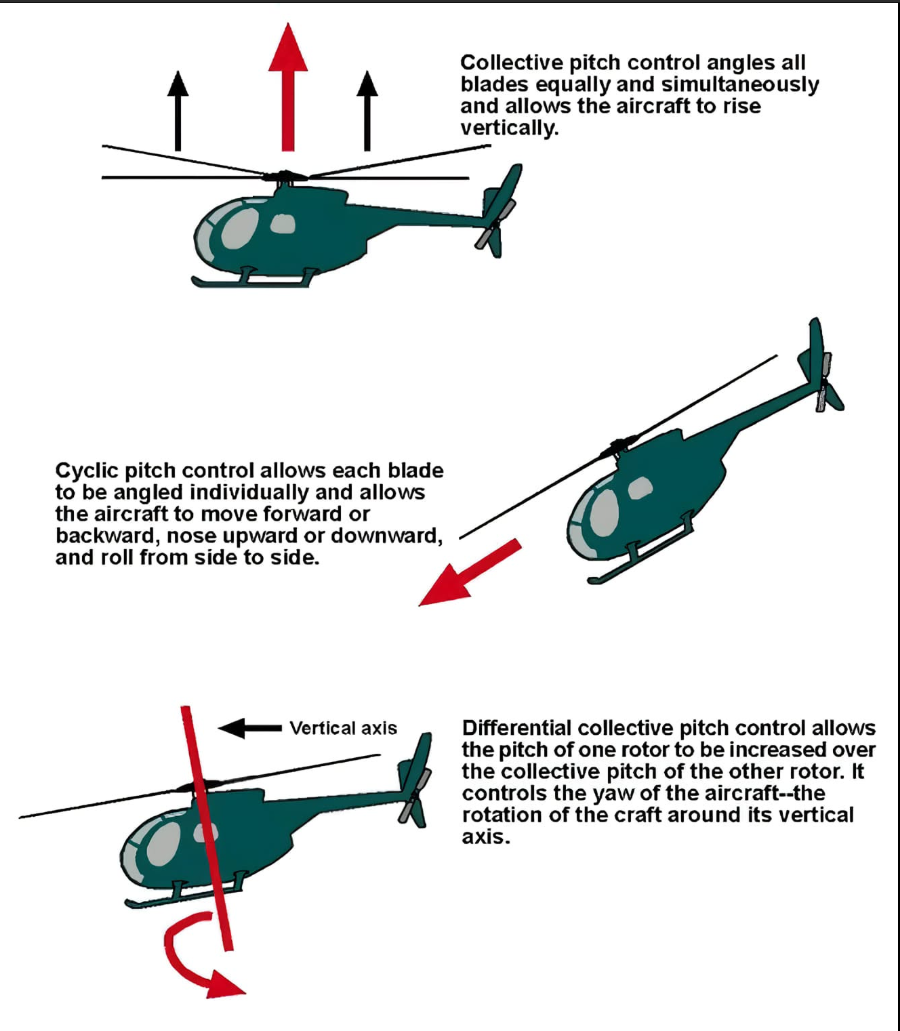
This interconnection is why the hover is so challenging for new students — you're constantly making small simultaneous corrections with all four controls.